Absurdity can be an important tactic for non-violent protest. One of the great masters of this form of protest was Noël Godin, who was the king of the “entartement” (a made up word in French that roughly translates into the act of “pie-ing” someone).
From his obituary this week in the NY Times – “While Charlie Chaplin, Laurel and Hardy and the Three Stooges were among the first to demonstrate the hilarity of pie throwing, Mr. Godin refined the art of using whipped cream as a kind of protest.”
The distinct smell after it rains is called petrichor, a word coined by Bear and Thomas in the their 1964 Nature article from petra (rock) and ichor (the the ethereal golden fluid that runs in the veins of Ancient Greek gods and goddesses). Humans can detect geosmin, one of the key molecules that leads to this unique odor, in extremely low concentrations – which makes evolutionary sense since locating water is so critical.
I’m a big fan of the Zettelkasten as a way to organize information, and – more importantly – as a tool that promotes thinking deeply and writing well. This week, there was a post on the online Zettelkasten forum by Sascha (that’s the only name he uses on the forum) that really caught my eye. I’m not sure where to go with this, but I find it incredibly appealing as a way to visualize a concept that has multiple theories to explain it.
Anchored model layering is a visual way to “overlap” (layer) different models created to understand something. Another way to think about it is creation of a “meta-model” that allows you to generate new, creative ways to think about any complex problem.
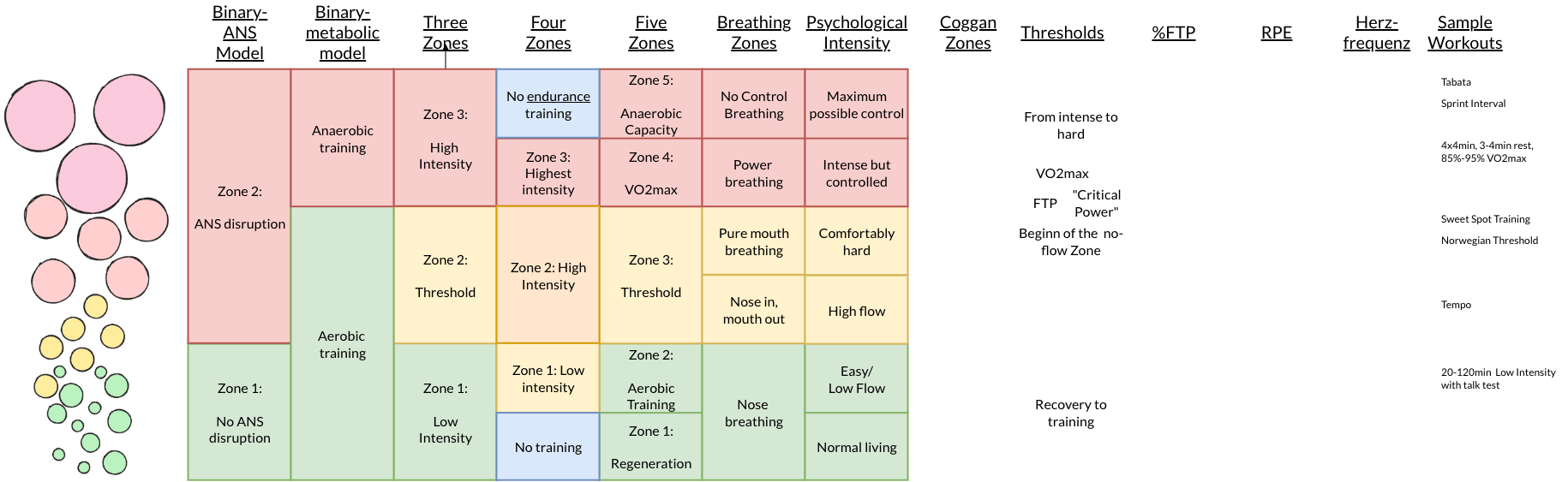
The example used in the post is about how intensity in exercise leads to endurance. There are numerous ways to explain why exercise works (mental models). Using anchored layering lets you put those models side by side to compare, merge, or see new connections between these models.
In this “meta-model” – the visualization of the anchored layering – the Y axis is the “anchor” – the harder you push, the more muscle fibers you recruit. All the models then have to explain how to define “pushing harder”. The x axis is each of the models, side by side. (Which means new models can always be added).
Although I follow my ancestors’ spiritual path, I have incredible respect for the varied traditional paths my friends follow…and for those who follow no specific spiritual tradition. This post, which is the text of a sermon I gave on Sunday, does not and should not imply anything beyond my desire to share… and to lift up love where ever we find it.
Merriam-Webster defines a zero sum game as “a situation in which one person or group can win something only by causing another person or group to lose it.” It is human nature, particularly in Western civilization, that we live this way – that we view our work as a competition and resources as limited and finite. The message we get, over and over, is that there is only so much money (or other resources) available, which means we have to fight for our portion of that limited pie.
That’s a zero-sum game – which can also be summed up as “If you win, I lose.”
This idea, the concept of a “zero-sum game”, is everywhere. Because we live in a society of competition and individualism, we have what psychologists call a zero-sum bias… a tendency to view that this idea applies to other things, too. (For example, the idea that if we give women equal rights it will somehow diminish the rights of men.)
I’ll remind you that the chapters and verses in Matthew were added a thousand years after the text was written. The original text was one long story, not divided arbitrarily into chapters and verses, which means it is always important – and often helpful – to look at what precedes and follows any text we are wrestling with.
Three things happen just prior to our gospel text for today
Jesus blesses the children that the disciples want to send away
A rich young man wants to know how to get into heaven, and
Peter wants to know what he is going to get out of being a disciple
Blessing children (who have no power), telling a young man to give away all his money, and reassuring Peter he will get “everything” by having given up everything… that’s what precedes today’s gospel reading. After telling Peter that he will end up with “everything” because he gave up everything Jesus says this, the verse that immediately precedes today’s reading: “But many who are first will be last, and the last will be first.”
Today’s gospel lesson takes place towards the end of the 2-3 years of Jesus’ ministry. The Romans and Jewish authorities are increasingly worried about what Jesus is preaching. That’s why the text that immediately follows today’s passage is Jesus foretelling his death and resurrection – for the third time.
Today’s gospel text is a parable, and starts as many of them do like this: “The kindom of heaven is like…”
More than anything else, when we decide to follow Christ we are committing to do what we can to bring the kindom of heaven to earth… We actually pray those words every week when we pray the Lord’s Prayer together – so it’s particularly important that we understand what the kindom is like.
In today’s parable the Kindom of Heaven is like a landowner.
He’s a landowner who needs help in the vineyard, so he goes to the market at 6 in the morning and hires some workers. There is discussion about the pay and they all agree that they will be paid 1 denarius, which in today’s dollars would be about $150 dollars for the day, or about $15 per hour for 10 hours of work. (It shouldn’t escape your notice that $15 dollars an hour is twice what our minimum wage is today.)
Three hours later the landowner goes back to hire more people. Did he miscalculate the number of people he needed? Was there more work than he realized? We don’t know. There isn’t a negotiation about the pay this time – he just says “I’ll pay you what’s right.”
Then he goes back again, and again, and again. He makes 5 trips to the market, each about three hours apart. At this point we can assume this isn’t incompetence on his part… There’s some other motive here.
Five sets of workers who worked different lengths of time.
I’m pretty sure that other than the first group these workers expected they would be paid by the hour – that they would receive pay for the hours they worked, which would have been fair.
But that’s not what happened.
At the end of the day, they are paid in reverse order – the last ones hired are the first ones paid. It’s not hard to imagine what they felt when they were paid a full day’s wage for their 1 hour of work, when they realized they would be able to feed their families for several days, that no one would go hungry. We can assume they recognized this as generosity, praised God, and thanked the landowner.
The landowner goes sequentially, paying all the workers in reverse order until he gets to the first group – the ones he hired at 6 in the morning to work all day. And here’s where the zero-sum game kicks in. They are angry. There was a pool of money available for wages that day, a pool that had not been divided the way they thought it should. More specifically, they thought the low hour workers got more than they deserved, which meant they “lost” in this zero-sum game.
Finally the crew that had worked from sunup to sundown got to the payroll office. And they got the usual daily wage.
They were furious. “We worked all day and got the same thing as those slackers who only worked a fraction of the time. They don’t deserve that! We deserve more!”
The owner in essence says, “Deserving has nothing to do with it. This is about my generosity. I have enough for everybody to have enough. So I give it freely. Are you now dissatisfied with enough?”
The message is stunning, really. Enough will never be enough for me unless I want it for everybody else.
Drops of Kindness, Nicolene Botha
To be a follower of Christ means to love our neighbor with our actions, to deeply understand that justice is love out loud… But how do we actually do that? What practices do we need to embrace if we are serious about working to bring the kindom of God to Earth?
There are some practical lessons we can take from this parable – some of which are not so comfortable.
The workers who had worked all day were mad, but they had at least two other choices for how they could have responded. They could have simply not cared one way or another – they were paid fairly – it didn’t matter what happened to the rest of the workers. Or they could have been happy that their co-workers, their neighbors, people they surely knew, would now be able to go home and feed their family.
The kindom of God is like people who celebrate when those less fortunate are given unearned gifts that allow them to thrive.
The second practical lesson, the one that’s maybe not so comfortable, is about how we are supposed to act if we are the landowner in this story.
But before we go there, let me be clear that this parable is not about social structure or economic theory – as Amy-Jill Levine puts it “Jesus is neither a Marxist nor capitalist, rather he is both an idealist and a pragmatist… his focus is often less directly on good news to the poor than on responsibility of the rich.”
So what does this Parable tell us about the responsibility of the rich, of those who have more resources than others?
Ouch.
This is not an ambiguous message.
We are told that those who have resources should be agathos. That’s the Greek word that is translated as “generous” in Verse 15 of today’s reading: Am I not allowed to do what I choose with what belongs to me? Or are you envious because I am generous?
But it turns out that the word agathos means more than just being generous… It’s the most common Greek adjective for “good”, but it means much more than just good behavior. This is a deep, rich word that means “moral or intrinsic goodness, often with a sense of generosity or benefit towards others”. **
Which means verse 15 could be translated: Am I not allowed to do what I choose with my resources? Or are you envious because I am reflecting the true nature of our loving God by being generous towards those who have less than you do?
The kindom of God is like good people who do what they can to share what resources they have with others who have less, and who rejoice when everyone can thrive.
What this means for each of us will be different – Parables don’t come with detailed instructions! But as people with resources – which we all are – this lesson demands that we interrogate not just what we give, but how and why we give it.
This is echoed in today’s reading from second Corinthians as well, this idea of being intrinsically good, of giving to others in need not out of obligation but with true joy: “…for God loves a giver who gives cheerfully. There are no limits to the grace of God who will make sure you will always have enough of everything and even a surplus for good works…”
The kindom of God is not a zero-sum game.
No one has to lose in order for others to win.
The kindom of God is like friends, neighbors, congregations, and countries that finally understand that – Enough will never be enough for me unless I want it for everybody else.
Thy kindom come, thy will be done on earth as it is in heaven…
Amen
Sermons are best listened to, rather than read. If you’d like to hear this one, it starts at 24:33 on this recording
*I mistakenly attributed this quote to Suzanne Guthrie in the sermon.
I’m on my way back from the annual meeting of the American College of Surgeons where I was delighted to lead a “meet the expert” session on well-being. These are some of my favorite sessions. Instead of the “sage on the stage” model, we always have a great conversation… and I always learn far more than I teach.
To get the conversation started, I put together a handout with “10” bullet points of things I wish I’d known earlier in my career… which I’m happy to share with you.
Stay well!
p.s. If you’d like me to email you a copy of the pdf, just let me know.
We’ve done something we aren’t proud of, held the feeling of shame close and suffered as we tried to decide what to do next. It’s usually accompanied by feeling we are the only person who has ever done something so stupid…which means we also feel isolated and alone.
We regret what we did. If it was particularly onerous we may feel remorse. And, because there is (always) a way to turn things around, we may look for a way to repair what has been broken.
The prefix “re” has two meanings in English. It can mean “to repeat” and/or “to turn back”. It can also be used as a way to multiply the force of the word it’s attached to, a way to point to the word and exclaim “THIS!”.
Re-morse: To be bitten over and over.. (something that is gnawing at us)
Re-pent: To regret so much that you are moved to do something about it
The word repentance has become known as strong language. It has been used as a bludgeon or a burden on so many for so long that its original richness may be in danger of being lost—if it hasn’t been already. The Greek word translated into English as “repentance” is metanoia. The prefix meta means “beyond,” hence metaphysics being the study of—or speculation about—what is beyond the natural. The word noia means “thought” or “mind.” Together, however, metanoia means to change your thoughts, to change your mind, to turn in a new direction, to reverse a direction and go a different way. Hello to new directions.
Padraig Ó Tuama, In the Shelter: Finding a Home in the World
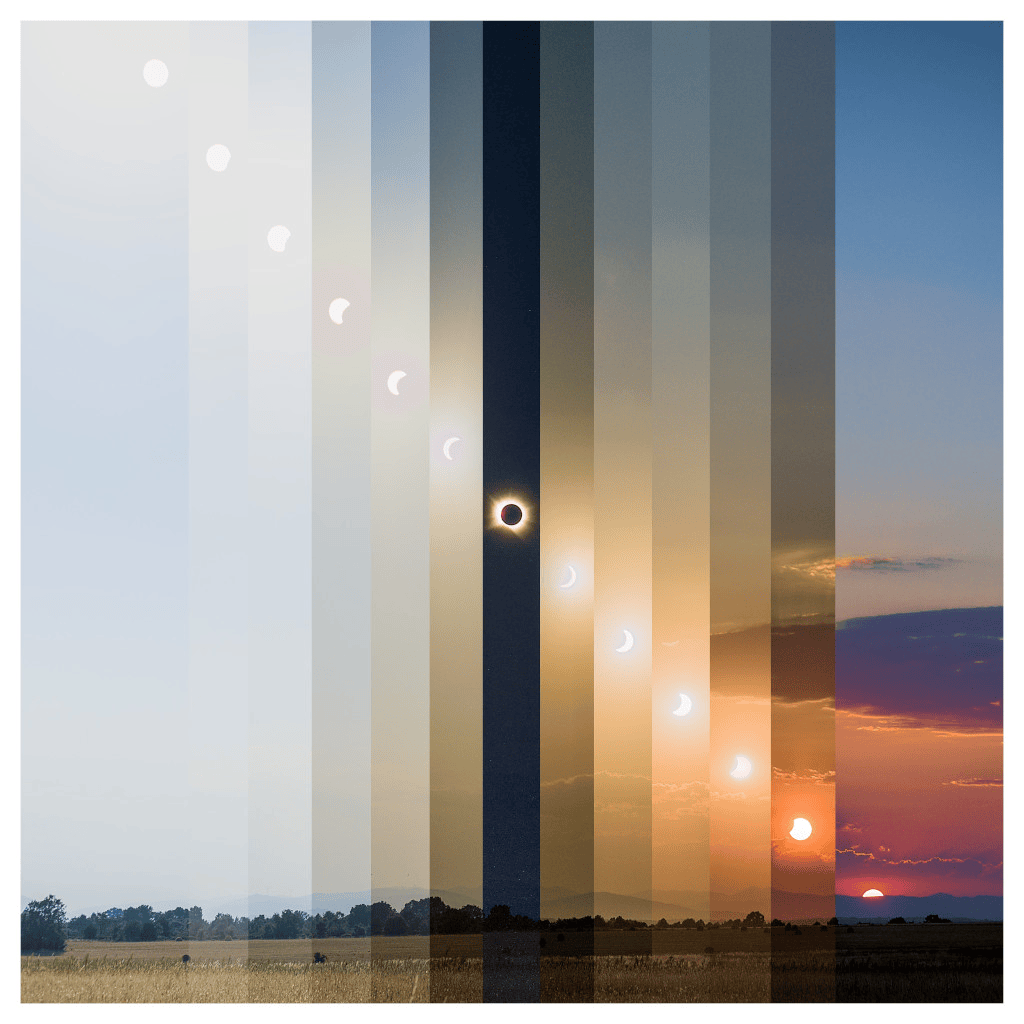
If you’ve ever experienced a complete solar eclipse you know how powerful the experience is. The birds stop singing, the skies darken, and every fiber of your being capable of feeling awe is awakened.
They are magical events, and nothing is more magical than the fact that astronomers can tell us exactly when to expect one. People can put them on their calendars, wait for the moment on the appointed day, look up through welding glass, and watch the moon begin to eat the sun…Of course, predicting eclipses is not magic at all—really, it’s the opposite of magic. But this kind of accurate astronomical prediction of such events, which is now routine, wasn’t part of any human cultures until the last few thousand years at most.
The world lost an astounding poet, farmer, and prophet this week, someone who chose a way of life and a way of thinking that stands as an example for us all. May we all learn from the thoughtful decisions he made, and the gentle way expressed them.
When despair for the world grows in me and I wake in the night at the least sound in fear of what my life and my children’s lives may be, I go and lie down where the wood drake rests in his beauty on the water, and the great heron feeds. I come into the peace of wild things who do not tax their lives with forethought of grief. I come into the presence of still water. And I feel above me the day-blind stars waiting with their light. For a time I rest in the grace of the world, and am free.
Pushups are the ultimate body weight upper body exercise (like squats are for the lower body). You don’t need any equipment, which means it’s a great way for people that are really busy (like medical students, residents, docs and other healers) to stay strong (and become stronger).
During busy seasons, fitness is often one of the first things that gets dropped. The push-up is one of the best “everything is crazy but I can still squeeze this in” movements I know.
The physiology originally taught in medical schools circled around the idea that homeostasis, maintaining a range of acceptable physiology, was what kept us alive and healthy.
But in the late 1980s, this was revised (one might say refined) to a better understanding… that returning to a set point in a constantly fluctuating environment wasn’t enough… nor was it what really happened. Peter Sterling (a Professor of Medicine) and Joseph Eyer (an interdisciplinary scholar interested in stress) realized that ” …the way to stay stable through the process of change is by changing, at least to some extent” – which they called “allostasis”.
I had never heard the words “allostatic load” until recently.
Allostatic load, you know, like when an attending doesn’t speak up when a resident is being belittled. When you don’t speak up you are reinforcing discrimination and isolation … If you want to make this better you need to look in the mirror.
anonymous surgeon
Allostatic load is what pushes us from our states of equilibrium, and it is an important part of how we grow and change. But an allostatic load that is too great, too chronic, or intentionally harmful can push anyone beyond being able to recover or change.
Do the best you can until you know better. Then when you know better, do better.
Dark matter has evaded direct detection for decades because it does not emit, absorb or reflect any light. It is as pervasive as it is inaccessible, making up 85 percent of the matter in our universe, a tease for the particle physicists keen on deciphering its nature.
I’m not a scientist, but I’m fairly fluent in most scientific concepts… and this blows my mind.
This paper (published this week) is a very complicated (for me, not for physicists) description of what the NY Times described “a single, tiny nudge of one particle into another”.
The best part is that the LZ team (250 scientists and engineers from 39 institutions) who published this finding have been looking for this “nudge” for a long time. Even though there’s only a small number of people who can understand this science, it’s clear this may be a game changer in our understanding of the universe… since this amazing team may have actually “seen” dark matter for the first. time.
Rules for a pilgrimage
I’ve been thinking a lot about my Dad this week. After he retired, he took to the road in his Prius for what turned out to be close to 100 “pilgrimages”. The process started with choosing a distant goal – and then he’d just head out in that general direction. He decided day by day on a route using five “rules” (see below). Sometime in the mid afternoon he’d find one of the many hotels on the road that had breakfast included and he’d pull in. He’d check in, pour a Scotch, and start writing.
1. Freeways are to be crossed, not driven on. 2. If the sun gets in your eyes – turn 3. If you see a Dairy Queen with pick-ups in front of it, stop to join the conversation. 4. Ask anyone who is alone at breakfast if you can join them and take the time to learn their story 5. Anything beautiful warrants a stop.
I was able to spend some time with medical students this week as a substitute teacher for their ethics course. We had a great conversation about ethics… but (not surprisingly) we also spent some time talking about more general topics like how hard it is to keep your life in balance as a medical student.
I’ve recently started reading Howard Luks’s blog, an orthopedic surgeon who mostly directs his advice towards people like me (people “of a certain age” as the French say). His advice this week was about “exercise snacks”, which is a great strategy for medical students, residents, and other busy folks (not just those of us who have a few years under our belts) when life it too busy to work exercise into your schedule. “Exercise snacks” are basically “exercise” that takes 30 seconds to a few minutes done multiple times during the day. That’s all. You can do pushups, dance to a song, or (always available in medical schools and hospitals) just take the stairs. Worth trying!
She was an icon of country music and a superstar with millions of fans… but Dolly Parton was also a prophet who changed the world by showing us what it really means to love your neighbor.
“Prophets, then, are full truth-tellers, not fortune-tellers. They pull back the veil to radically reframe our preferred storyline of history: the boring and predictable narrative of winners and losers, rewards and punishments. They are by definition those rare individuals who see reality in its fullness and dimension, rather than in dualities like totally right or totally wrong, all good or all bad.”
Dolly Parton loved her neighbors in Seville County, Tennessee. She also understood deeply that everyone (and especially those who are marginalized) are our neighbors, too – a core teaching of her Christian faith.
Here’s a short list of ways Dolly Parton showed us how to live wisely and love well.
May her memory be a blessing – and a call to action for us to share what we can and love as much as we are able.
“We’re supposed to love one another and love our neighbor as ourselves, but that seems to be such a hard thing to do. Yet it doesn’t take that much time to be kind.”
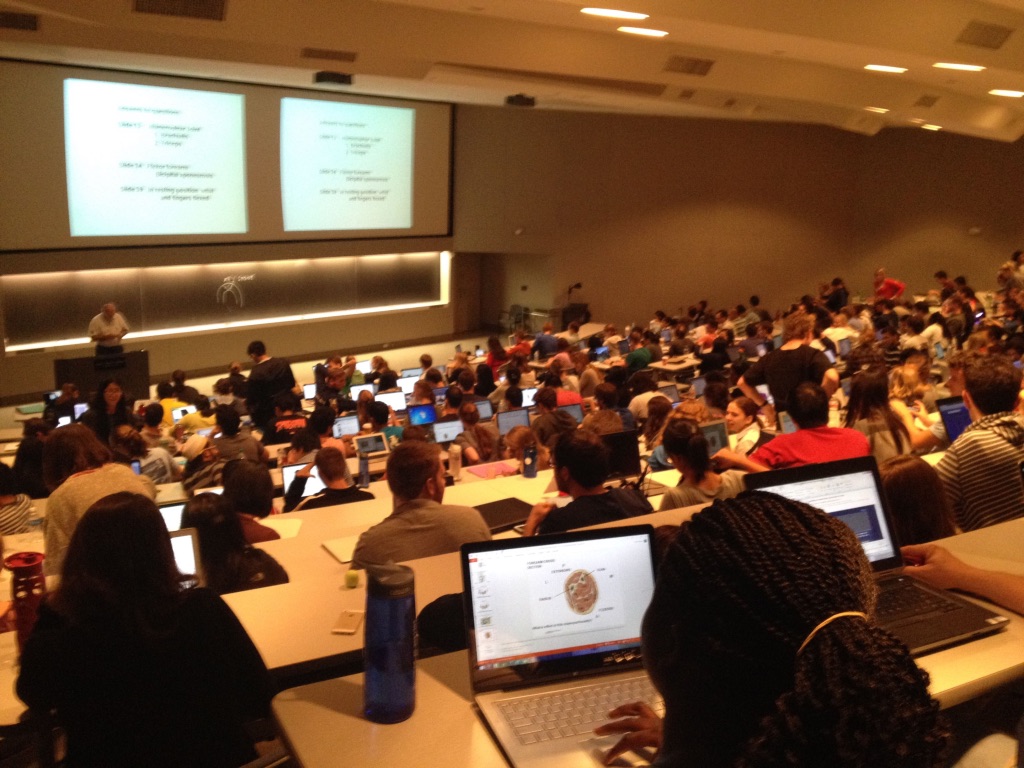
“The seat you randomly chose today is the seat you’ll sit in for the rest of the term.”
That was the cold open from one of my college professors at the first class of the quarter. And he was right. About me and most of the 200 others in the lecture hall that day.
Fifth row from the back, left side of the auditorium (facing the lecturer), 4th seat from the aisle.
That’s where I sat in medical school.
Why do we pick a specific seat when we walk into a classroom, place of worship, or even a spin class (is it random or not?) … and why do we keep returning to that same seat? I’ve thought for a while that this phenomenon would be a fascinating project for an enterprising graduate student, but it turns out there have been studies done and there are three main explanations for this behavior.
Territoriality. The most powerful driver of why we choose and return to a specific seat is a very primitive one. Territoriality is not so much about claiming our rights to a specific place, but a way for a group to keep the peace. If this is my property and if you agree, we won’t fight about it.
Cognitive load. One less thing to decide means you can decrease a tiny bit of cognitive load.
Social interaction. There’s a plus to being surrounded by people you like (and who like you).
How we choose seats in an auditorium is interesting from a scientific point of view, but it’s also a powerful metaphor. We are drawn to a specific seat by a form of psychological “gravity”, which increases in strength the more times we sit there. There’s a similar form of “gravity” that draws us to our partner, our specialty choice, the city where we want to live. Most of the time this “gravity” grounds us and allows us to grow, but if and when it doesn’t, it helps to remember that you can choose to move to another seat.
“… being subject to physical gravity is mandatory, but being trapped by life gravity is optional.”
I’ve been reminded that I’ve strayed away from periodic advice to medical students and trainees on how to navigate (aka hack) their busy lives to include more joy (and more healthy habits). So here’s a food hack that is great #CallFood and also meets the #PizzaRule (food that takes less time to prepare than it takes to order a pizza).
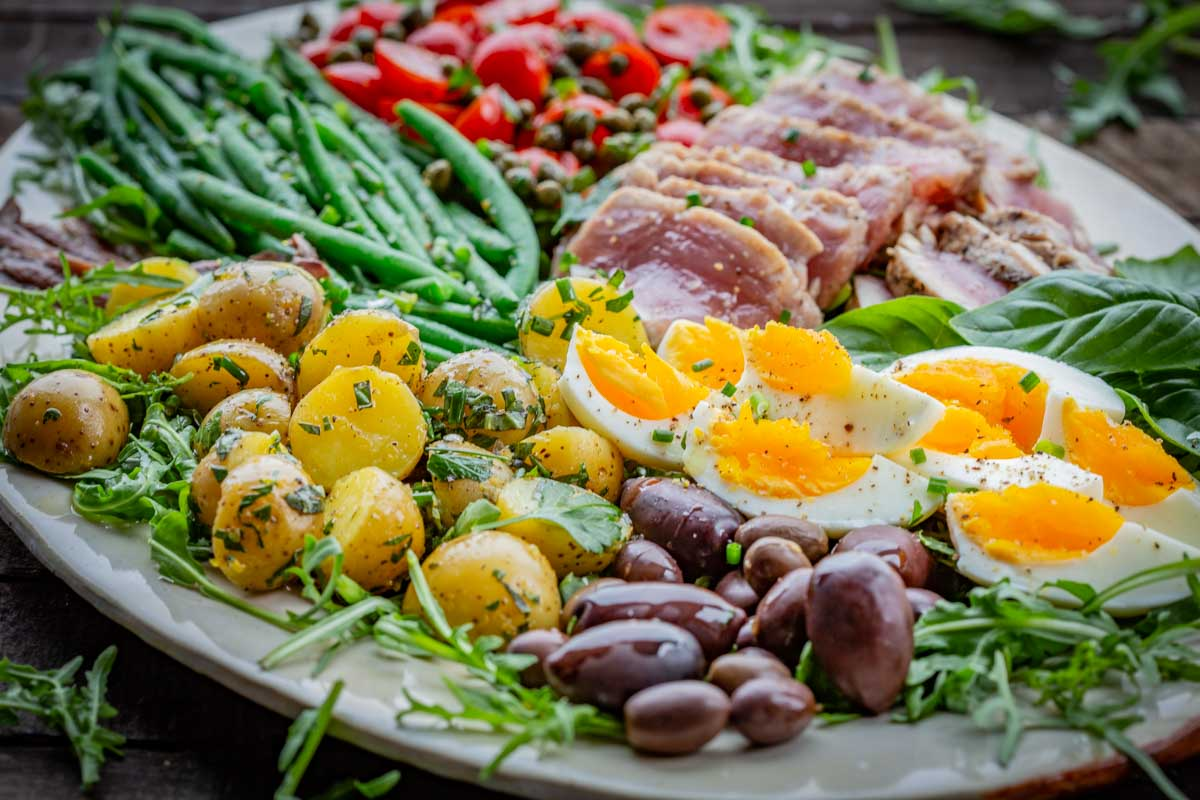
It’s really hot in Houston, so last night we decided to make a “salade composée” – which means just putting some wonderful items on top of some lettuce in a cool looking pattern. It’s super easy, very fast, delicious, and healthy.
I washed some lettuce (important, especially right now) and spun it dry for the base, cut up a tomato and some cucumber, opened a can of hearts of palm, cut up two hard boiled eggs, and added the leftover roast salmon and potatoes from dinner earlier this week. Which took me less than 10 minutes.
I dressed it with the vinaigrette I learned to make when I lived in France (thank you, Maryvonne… I think of you every time I make it!) – Put salt, pepper, a small dollop of Dijon mustard (this is mostly to act as an emulsifier, so use just a little unless you really love the taste) and a minced up garlic clove in whatever container you are using. Add the vinegar. Classically it’s red wine vinegar, but white wine or champagne vinegar will work, too. Here’s the simple, but important next step – wait a bit before you add the olive oil to make sure the garlic infuses into the vinegar and the salt is completely dissolved. The classic ratio of oil to vinegar in France is 2:1, but I prefer 1:1. Shake it or stir it to combine everything. That’s it. Simple, classic French vinaigrette.
In addition to being a colorful, creative composition (don’t underestimate what that does for your mood!) this is also a salad that lets you use what you have and what you love to eat. Here’s a list of potential ingredients to get you started:
Any fresh vegetable (tomatoes, cucumbers, bell peppers, celery, carrots… you get the idea)
Canned vegetables (green beans, hearts of palm, potatoes, beets, corn, or any other veggie that sounds good to you)
Canned beans like garbanzos or white beans
Leftover proteins or vegetables
Roasted potatoes, cooked green beans, and salmon from the deli in your grocery store
Rotisserie chicken
Anything you want!
Make enough to take to work as #callfood the next day (keep the lettuce separate if you don’t want it to get soggy).
If you want something a little more elegant, the classic salade composée, at least in southern France, is Salade Niçoise, with green beans, tomatoes, potatoes, hardboiled eggs, olives, and either tuna or anchovies. (And yes, this photo looks a lot better than mine!). It’s a great meal to make if you are inviting people over.